
Author: Scott Lynch
Share This Article:
What is Freeboard in Water Storage Tanks?
You’ve selected a tank based on your needs, the dimensions line up, and it fits within your workable area. In a perfect world, you send the tank design off for engineering, and you’re off to the races. But occasionally, the engineered design comes back requiring freeboard.
While it is not especially common, this scenario does arise from time to time, particularly in areas with high seismic requirements, and can come as a surprise.
For customers, this inclusion of freeboard usually leads to a few immediate questions: Why is freeboard required? How much will be needed? How does it affect usable capacity? Are there alternatives that reduce its impact?
In this article, we’ll break down what freeboard is, why it is used, what determines the required amount, and when you can expect the finalized freeboard number.
What does Freeboard Mean in a Water Tank?
Freeboard is the additional clearance or capacity provided above the required usable operating volume of a tank.
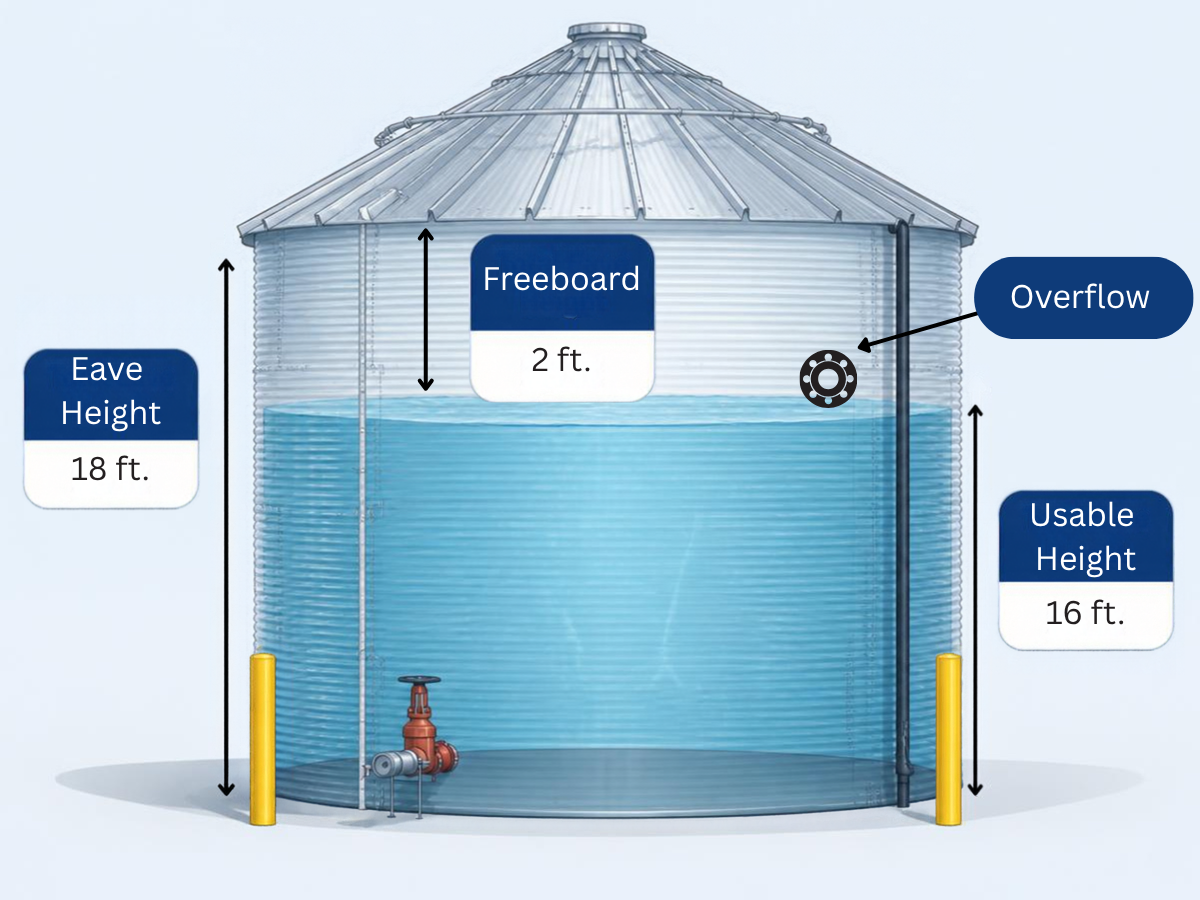
This extra space at the top of the tank allows for the movement of water in operation without disrupting the structural integrity of a tank, whether that disruption is from operations, climate, seismic factors, or a myriad of other reasons.
Two basic terms are useful when discussing tank capacity:
- Usable Capacity: The volume of water the system is designed to use or store for its intended purpose.
- Freeboard: Additional space above the usable operating level provided as part of the overall design.
The amount of freeboard required can vary depending on the application.
Sloshing and Freeboard
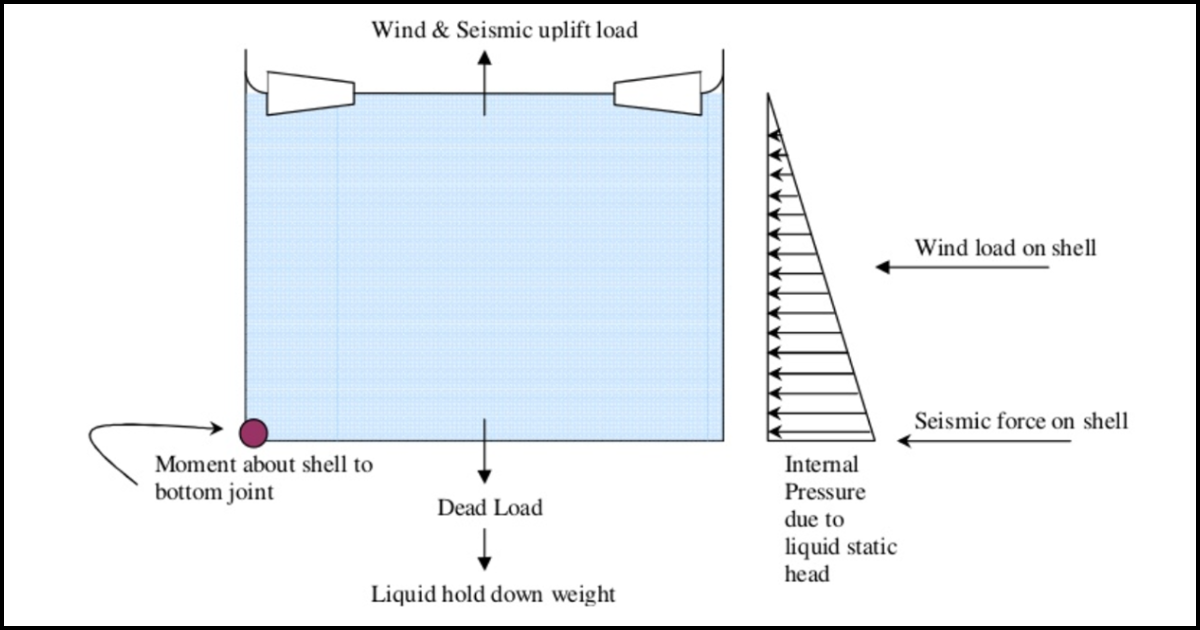
Sloshing occurs when liquid moves within a tank due to seismic conditions, agitation, wind, or other operating conditions. As the liquid surface moves, the water level can temporarily rise, increasing the potential for overflow if sufficient clearance isn’t provided.
This video does an excellent job of visualizing sloshing in a tank and shows how even small amounts of movement can add up to large waves.
Sloshing is dangerous for a multitude of reasons. One of the main dangers presented is large volumes of water impacting the roof structure or rising above the ring structure. A large enough wave could generate enough force to damage roof panels and send hundreds of gallons of water spilling over the tank.
The amount of freeboard needed to accommodate liquid movement depends on factors such as:
- Tank dimensions (height and width)
- Liquid depth and operating volume
- Filling and discharge rates
- Agitation and other sources of liquid movement
- Environmental conditions
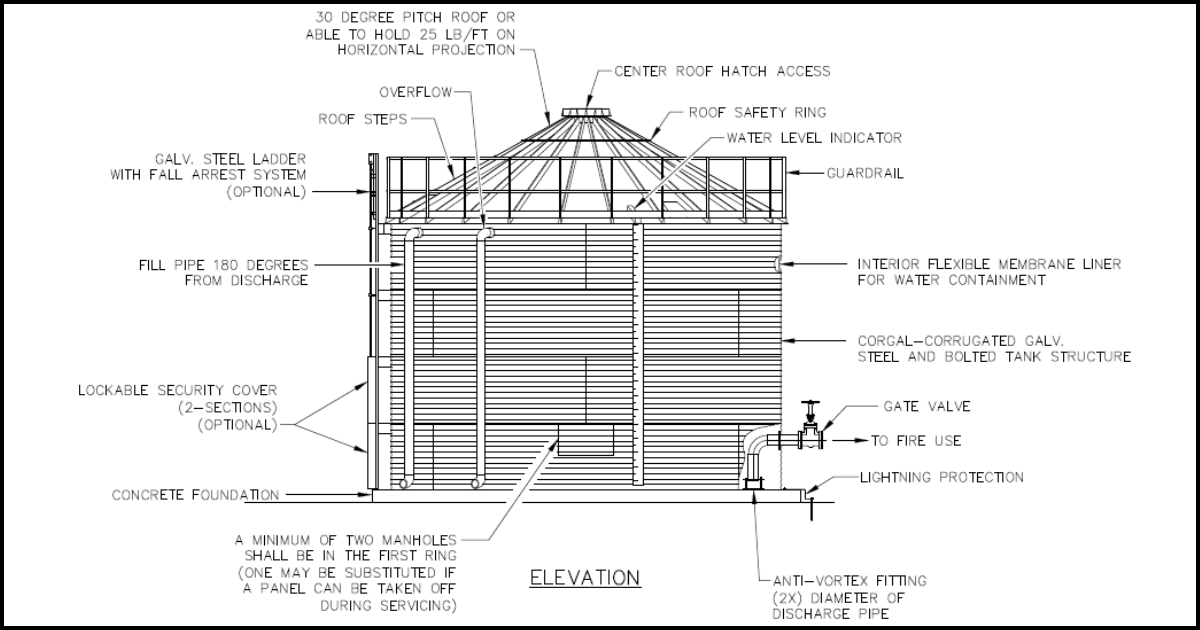
- Appurtenance locations
Because these factors are specific to each application, the freeboard required to accommodate sloshing cannot always be determined from tank capacity alone.
How Can I Determine if I need Freeboard in My Tank?
Various factors can help us determine if a tank needs to have freeboard space. Factors such as location, tank size/height, and previous builds in your area can provide useful context towards the size of freeboard required. However, as much as we can assume on freeboard levels, there are too many variables that will influence its engineering to determine this with absolute certainty.
At the quoting stage, several design details may not yet be finalized, including:
- Final equipment dimensions and layout
- Load characteristics and operating conditions
- Structural and mechanical design requirements
- Applicable codes, standards, and safety factors
- Customer-requested design modifications
While we’d like to accurately predict the freeboard level, the engineer of record will have the final say in how much freeboard is required. Overestimating freeboard can produce waste, while underestimating can cause changes in pricing or tank sizing after engineering is completed.
Why Engineering Is Required
Freeboard is not typically a fixed dimension that can be selected before the tank is engineered. The amount required can vary significantly depending on location.
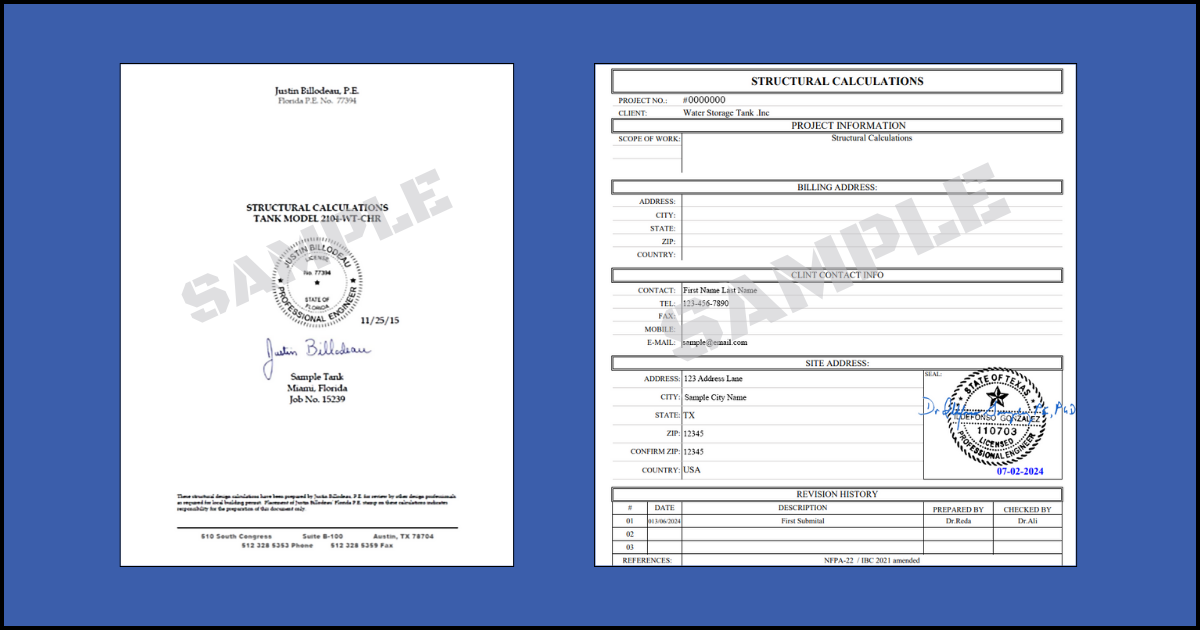
During design, the complete system can be evaluated using the actual tank dimensions, operating conditions, applicable standards, and project-specific requirements. Engineering calculations and design reviews can then be used to determine the appropriate clearance above the intended operating level.
This helps ensure that the tank provides the required usable capacity while also accounting for the conditions under which it will operate.
Understanding Freeboard During the Quoting Process
When discussing tank capacity, particularly in the early design phases, it is important to distinguish between the usable capacity the system requires and the total physical capacity of the tank.
A project may begin with a straightforward storage requirement, but additional engineering information and accessories can affect the final operating level and freeboard requirement. That’s why a preliminary quotation and the final engineered design should be viewed as two different stages of the process. A preliminary freeboard assumption may be useful for planning, but the final requirement should be established once the necessary engineering information is available.
We’ve put together a more detailed PDF explaining freeboard, why it matters, how sloshing can affect the required clearance, and why the final requirement is determined during engineering.
Frequently Asked Questions
Does every water storage tank require freeboard?
No, in fact, most tanks will not require any freeboard.
What is a common freeboard requirement for a water tank?
There is no standard amount of freeboard that applies to every tank. On projects where engineered freeboard is required, we commonly see requirements in the range of several feet, with approximately four feet being fairly typical in our experience. More demanding projects can require substantially more. The final requirement will depend on the tank geometry, site conditions, seismic criteria, and engineering.
What prevents me from filling into the freeboard area?
Tanks with freeboard will have their overflow set at its usable capacity, ensuring you cannot fill your tank too far without noticing.
Does freeboard count toward usable tank capacity?
No, freeboard will not count towards your usable capacity. For example, a 60,000 gallon capacity tank that is engineered with 4ft of freeboard can be reduced to roughly 47,000 gallons of capacity. (Exact calculations will vary based on diameter and appurtenances)
Are there any alternatives to freeboard?
In some cases, redesigning your tank’s structure can help alleviate the additional freeboard. This will largely depend on the seismic rating of your area, and the original size of the tank requested. This can become a costly endeavor and require a very intensive redesign with multiple revisions in the engineering process.
In short, there is not a universal alternative to freeboard. Any reduction or design change has to be evaluated as part of the engineered tank design.